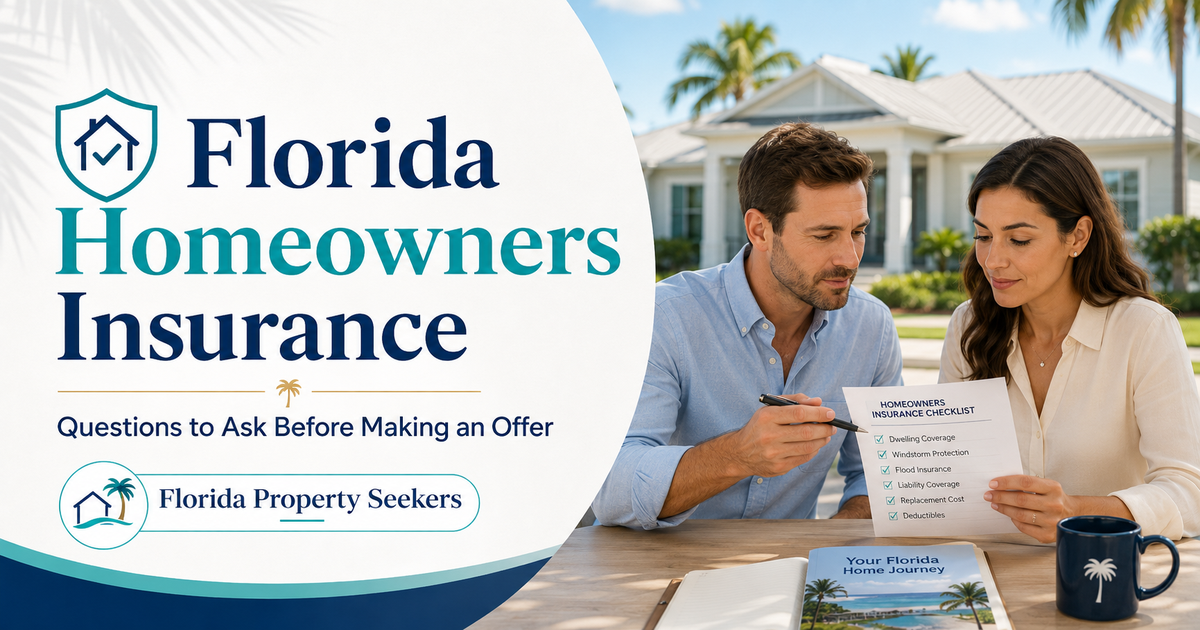
Ask whether the property can be insured on acceptable terms
Provide an insurance professional with accurate property details as early as practical. Ask what documentation, inspections, or updates may be needed and whether the likely premium and deductibles fit the ownership budget.
Understand what a homeowners policy may not cover
The Florida Insurance Consumer Advocate advises consumers to understand what is covered and excluded. Flooding, general wear and tear, and some other causes of damage may not be covered by a standard homeowners policy.
- Ask specifically about flood coverage.
- Review hurricane and other deductibles as dollar amounts.
- Ask about water, mold, roof, screened enclosure, and personal-property limitations.
- Verify whether mitigation features may qualify for discounts.
Do not rely on the seller’s premium
A seller’s policy, insurer, discounts, and coverage choices may differ from those available to a buyer. Request estimates based on the buyer, the property, and the intended coverage rather than assuming the existing premium will transfer.
Use licensed sources and comparison tools
Florida’s Department of Financial Services publishes consumer insurance guides, and the Office of Insurance Regulation provides the CHOICES rate comparison tool. These resources are starting points, not substitutes for a property-specific quote.