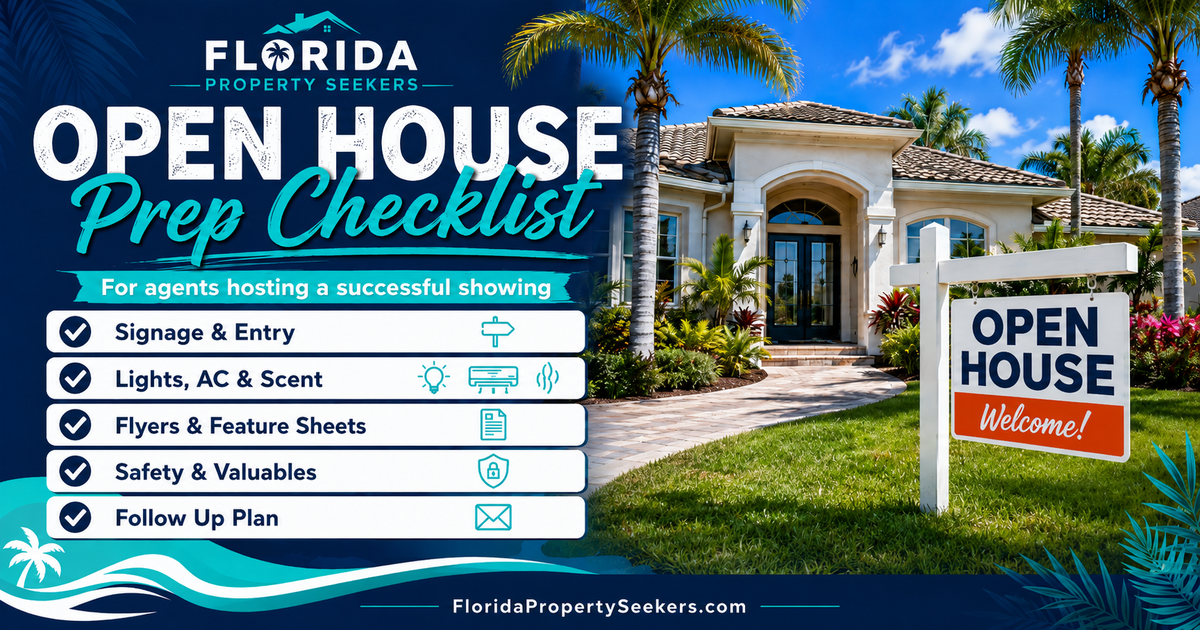
Open House Prep Checklist
View or Print the Full Open House Checklist
A good open house feels simple to the visitor because the preparation happened before the door opened. The property should be easy to find, comfortable to enter, uncluttered, safe, and ready for questions.
This is a general preparation guide for Florida real estate professionals. Brokerage requirements, seller instructions, association rules, local sign regulations, safety practices, and property-specific circumstances should always take priority.
Quick open house preparation checklist
- Confirm timing, access, seller instructions, association or community requirements, and any sign restrictions before the event.
- Arrive early enough to walk the exterior and interior before visitors arrive.
- Turn on appropriate lights, adjust temperature, open selected blinds or shades, and make the entry easy to identify.
- Remove or secure medications, valuables, financial papers, keys, weapons, personal documents, and other sensitive items.
- Review important property facts such as roof age, HVAC, major improvements, HOA or condo information, taxes, and known disclosure items.
- Bring clean property information, contact information, and any permitted marketing materials.
- Decide how visitor sign-in and follow-up will work before the first guest arrives.
- Walk the home again after the event and confirm doors, windows, lights, thermostats, and seller instructions before leaving.
Before you arrive
Confirm the event time with the seller and make sure the listing information being promoted matches the actual property. Check whether a gated community, condominium, HOA, building desk, or security procedure affects visitor access.
If directional signs are part of the plan, know where they are permitted and how they will be retrieved afterward. A visitor who cannot find the property or get through the gate is unlikely to have a good first impression.
Set the property for comfort, not distraction
Florida heat, humidity, rain, and bright sun can affect the experience immediately. A comfortable temperature, good lighting, dry entry, clean walkways, and a place for wet umbrellas when needed can matter more than elaborate staging touches.
Avoid heavy fragrance. Fresh and neutral is usually easier for visitors, especially anyone sensitive to scents or trying to evaluate whether a smell is covering a maintenance issue.
Know the facts buyers are likely to ask about
Review the property before the event rather than trying to remember details on the spot. Common questions can involve roof age, air conditioning, windows, storm protection, insurance considerations, flood exposure, utilities, association fees, special assessments, permits, renovations, and what conveys with the sale.
If you do not know an answer, say so and follow up. Guessing about a property fact is rarely worth the risk.
Think about visitor flow and safety
Know which doors should remain locked, where visitors should enter, and which areas require extra attention. Keep pathways clear and avoid leaving personal belongings, purses, keys, or devices unattended.
Use your brokerage’s safety procedures and your own judgment about staffing, sign-in, visitor movement, and situations that do not feel right. An open house is a marketing event, but it is also a real property with people moving through it.
Make the conversation useful
Visitors do not need a hard sales pitch the moment they walk in. Give them enough room to look, then be available for useful questions. A simple conversation about what brought them to the property, what they are comparing, and which features matter can be more productive than reciting the listing description.
For agents, an open house can also reveal what buyers are reacting to in the local market. Listen to repeated questions and objections. They can be useful feedback for the seller and for future marketing.
Follow up while the conversation is still fresh
After the event, organize legitimate inquiries, questions that need answers, and feedback worth sharing with the seller. Follow applicable brokerage, privacy, advertising, and communication rules when contacting visitors.
A short, relevant follow-up is usually stronger than a generic message sent to everyone who walked through the door.